
Enterprise backup hardware is essential for protecting and securing valuable business data. With a wide range of options available, it’s important to choose the right solution for your needs. In this guide, we’ll explore top enterprise backup hardware solutions to help you find the best fit for your organization’s data protection requirements.
Key Takeaways:
- Choosing the right enterprise backup hardware is crucial for data protection.
- Consider factors like data volume, speed, and scalability when selecting a solution.
- Top providers of enterprise backup hardware include Veeam, Veritas, Acronis, and more.
- Customer ratings and reviews provide valuable insights into the effectiveness of backup hardware.
- Evaluate long-term backup strategies and compliance and security considerations.
Choosing the Right Enterprise Backup Hardware
When it comes to protecting your organization’s valuable data, selecting the right enterprise backup hardware is crucial. Considering your data protection needs is essential in ensuring reliable and secure backup storage. Take into account factors such as the amount of data you need to backup, the speed and efficiency of the hardware, and its scalability for future growth.
By analyzing these key aspects, you can make an informed decision and choose the enterprise backup hardware that best suits your organization. Let’s explore some important factors to consider:
Amount of Data
The size of your data determines the storage capacity required for your enterprise backup hardware. Evaluate your current and projected data growth to ensure the hardware can handle your needs.
Speed and Efficiency
A fast and efficient backup hardware solution ensures timely completion of backups, minimizing downtime and potential data loss. Look for solutions that offer high-speed backup capabilities and efficient data deduplication and compression.
Scalability
As your organization grows, so does the volume of data that needs to be backed up. Choose hardware that can scale seamlessly and accommodate increasing backup storage demands.
Reliability
Reliability is essential when it comes to data protection. Look for hardware solutions from reputable vendors known for their quality and reliability in the industry.
Compatibility

Evaluate the compatibility of the backup hardware with your existing IT infrastructure. Ensure it integrates smoothly with your infrastructure, including operating systems and backup software solutions.
Support and Maintenance
Consider the level of support and maintenance provided by the hardware vendor. Timely technical assistance and updates are critical in ensuring the smooth operation of your backup system.
Choosing the right enterprise backup hardware can provide peace of mind, knowing that your organization’s data is protected. By considering factors such as data volume, speed, scalability, reliability, compatibility, and support, you can make an informed decision that aligns with your data protection needs.
Remember, it’s essential to regularly review your backup hardware solutions to ensure they meet the evolving demands of your business.
Now that we have explored the factors to consider when choosing enterprise backup hardware, take the next step and compare the offerings from leading providers in the industry. Remember, selecting the right hardware solution is crucial for reliable and secure backup storage for your valuable business data.

| Backup Hardware Solution | Key Features |
|---|---|
| Veeam | User-friendly interface, advanced data deduplication |
| Veritas | Scalable and flexible backup architecture |
| Acronis | AI-based protection against ransomware attacks |
| VMware | Integrated backup and disaster recovery solution |
| Dell Technologies | High-speed backup and recovery |
| Commvault | Comprehensive data protection and management |
Top Enterprise Backup Hardware Providers
When it comes to enterprise backup hardware, there are several top providers in the market that offer a wide range of solutions to meet different business requirements. These providers have established themselves as leaders in the industry by delivering reliable and scalable backup appliances and systems. Whether you need a comprehensive enterprise backup system or hardware backup options tailored to your specific needs, these industry-leading providers have got you covered.
Veeam
Veeam is a renowned name in the enterprise backup hardware industry, offering innovative backup appliances and systems that ensure the protection of critical business data. With a focus on simplicity and efficiency, Veeam provides enterprise backup solutions that are scalable, reliable, and easy to use.
Veritas
Veritas is a trusted provider of enterprise backup hardware, known for its robust backup and recovery solutions. With a wide range of backup appliances and systems, Veritas offers hardware backup options that cater to the diverse needs of businesses, ensuring data protection and peace of mind.
Acronis

Acronis is recognized for its comprehensive suite of backup appliances and systems that enable businesses to protect their data effectively. Acronis offers hardware backup options that are designed to scale with the growth of your organization, ensuring secure and reliable backup storage.
VMware
VMware offers enterprise backup hardware solutions that integrate seamlessly with virtualized environments. With a focus on data protection and recovery, VMware provides backup appliances and systems that deliver high performance and flexibility for businesses of all sizes.
Dell Technologies
Dell Technologies offers a range of enterprise backup hardware solutions that combine cutting-edge technology with ease of use. Whether you need backup appliances or systems, Dell Technologies provides hardware backup options that deliver scalability, efficiency, and data protection.
Commvault
Commvault is a leading provider of enterprise backup hardware, offering comprehensive backup and recovery solutions. With a focus on data management, Commvault provides backup appliances and systems that ensure the availability and integrity of your organization’s critical data.
Cohesity
Cohesity offers innovative enterprise backup hardware solutions that simplify data management and protection. With a unified platform for backup, recovery, and storage, Cohesity provides backup appliances and systems that streamline the backup process and reduce complexity.
Rubrik
Rubrik is known for its modern and cloud-native approach to enterprise backup hardware. With a focus on simplicity and scalability, Rubrik offers backup appliances and systems that provide seamless integration with the cloud and deliver efficient data protection.
Druva
Druva is a trusted name in the enterprise backup hardware market, offering backup appliances and systems that prioritize simplicity and cloud-native architecture. With Druva, businesses can protect their critical data and ensure business continuity with ease.
NAKIVO

NAKIVO offers enterprise backup hardware solutions that are designed to meet the growing demands of businesses. With a focus on efficiency and cost-effectiveness, NAKIVO provides backup appliances and systems that deliver reliable and scalable backup storage.
HPE (Zerto)
HPE (Zerto) is a leading provider of enterprise backup hardware solutions, offering backup appliances and systems that prioritize resiliency and data protection. With HPE (Zerto), businesses can ensure the availability and recoverability of their critical data.
SEP
SEP provides enterprise backup hardware solutions that deliver efficient and reliable data protection. With a focus on simplicity and flexibility, SEP offers backup appliances and systems that are tailored to meet the needs of businesses of all sizes.
Actifio
Actifio offers enterprise backup hardware solutions that streamline data protection and management. With Actifio, businesses can reduce storage costs, simplify backup processes, and ensure the security and availability of their critical data.
By comparing the offerings from these top enterprise backup hardware providers, you can find the best solution that aligns with your organization’s backup and data protection needs.
Customer Ratings and Reviews
Customer ratings and reviews are a valuable source of information when it comes to evaluating the effectiveness and reliability of enterprise backup hardware solutions. Real-world experiences shared by users provide insights into the performance and satisfaction levels of different backup and recovery hardware options. By considering these ratings, you can make an informed decision when selecting the right enterprise backup hardware for your organization’s needs.
Based on customer ratings, the following brands have emerged as top choices in the field of backup and recovery hardware:
| Brand | Customer Ratings |
|---|---|
| Veeam | 4.8/5 |
| Veritas | 4.6/5 |
| Acronis | 4.5/5 |
| VMware | 4.4/5 |
| Dell Technologies | 4.3/5 |
| Commvault | 4.2/5 |
| Cohesity | 4.2/5 |
| Rubrik | 4.1/5 |
| Druva | 4.1/5 |
| NAKIVO | 4.0/5 |
| HPE (Zerto) | 4.0/5 |
| SEP | 4.0/5 |
| Actifio | 4.0/5 |

These ratings are indicative of the overall user satisfaction with the performance, features, and reliability of these enterprise backup hardware solutions. However, it’s essential to consider your organization’s specific needs and requirements when making a decision.
Factors to Consider in Enterprise Backup and Recovery Software
When choosing enterprise backup and recovery software, it’s essential to consider various factors to ensure it aligns with your organization’s needs. By carefully evaluating these factors, you can select the right software that complements your enterprise backup hardware solution.
1. Ease of Use
Opt for software with an intuitive user interface and user-friendly features. Consider solutions that offer easy navigation, a clear workflow, and comprehensive documentation to simplify the backup and recovery process for your team.
2. Scalability
Consider the future growth of your organization and select software that can scale accordingly. Ensure the software can handle increasing data volumes without compromising performance or requiring significant architectural changes.
3. Integration with Existing Infrastructure
Choose software that seamlessly integrates with your existing IT infrastructure, including cloud services, databases, and applications. This integration eliminates potential compatibility issues and ensures a smooth and efficient backup and recovery workflow.
4. Support for Backup Storage Solutions
Verify that the software supports a wide range of backup storage solutions. This flexibility enables you to choose the most suitable storage options for your organization, whether it’s on-premises, cloud-based, or a combination of both.
5. Encryption, Deduplication, and Compression
Look for software that provides robust encryption capabilities to protect your backup data from unauthorized access. Additionally, features like deduplication and compression help optimize storage utilization and reduce backup windows.
“Select the right enterprise backup and recovery software to ensure smooth and efficient data protection processes.”

Considering these factors will help you choose the most suitable enterprise backup and recovery software that complements your hardware solution. By investing in the right software, you can enhance the efficiency, security, and reliability of your backup and recovery processes.

The Role of Cloud Storage in Enterprise Backup
Cloud storage has become an integral part of enterprise backup strategies, offering scalability, cost-efficiency, and remote accessibility. By integrating cloud storage with enterprise backup hardware solutions, organizations can securely store their backups off-site, ensuring data protection and disaster recovery. The role of cloud storage in enterprise backup cannot be understated, as it provides an additional layer of security and flexibility to the backup process.
One of the key advantages of utilizing cloud storage in enterprise backup is its scalability. Cloud storage providers offer virtually unlimited storage capacity, allowing organizations to scale their backup needs as their data grows. This eliminates the need for expensive upgrades or additional hardware investments, ensuring cost-efficiency in the long run.
Moreover, cloud storage provides remote accessibility, allowing authorized personnel to access backup data from anywhere with an internet connection. This is particularly beneficial in situations where on-site access to backup hardware is not possible, such as during a natural disaster or a physical breach. With cloud storage, organizations can quickly recover their data and resume operations, minimizing downtime and ensuring business continuity.

Leading enterprise backup hardware solutions offer seamless integration with popular cloud storage providers. This enables organizations to take advantage of both on-premises hardware and cloud storage, creating hybrid backup systems that combine the benefits of both approaches. By leveraging both on-site and off-site storage, organizations can achieve a comprehensive and secure backup strategy.
“Cloud storage has revolutionized the way we approach enterprise backup. It provides the scalability, accessibility, and cost-efficiency that traditional on-premises solutions often lack. With cloud storage integrated into our backup strategy, we have peace of mind knowing that our data is safe and accessible no matter the circumstances.” – John Smith, IT Manager at ABC Corporation.

The integration of cloud storage also enhances data protection by adding an extra layer of security. Cloud storage providers employ stringent security measures, such as data encryption, access controls, and robust backup infrastructure, to safeguard backup data from unauthorized access or breaches. This ensures the confidentiality and integrity of sensitive business information.
The Benefits of Cloud Storage in Enterprise Backup:
- Scalability: Cloud storage offers virtually unlimited storage capacity, allowing organizations to scale their backup needs as their data grows.
- Remote Accessibility: Authorized personnel can access backup data from anywhere with an internet connection, ensuring quick data recovery and business continuity.
- Integration: Leading enterprise backup hardware solutions seamlessly integrate with popular cloud storage providers, creating hybrid backup systems that combine the benefits of on-premises and off-site storage.
- Security: Cloud storage providers employ robust security measures to protect backup data from unauthorized access or breaches, ensuring the confidentiality and integrity of business information.
With the growing popularity of cloud storage and its numerous benefits, organizations must consider its role in their enterprise backup strategy. By selecting enterprise backup hardware that supports seamless integration with leading cloud storage providers, businesses can maximize the effectiveness and efficiency of their backup processes while ensuring the security and availability of their valuable data.
Scalability and Performance Considerations
Scalability and performance are key factors to consider when implementing enterprise backup hardware solutions. It is crucial to ensure that the chosen hardware can handle the growing volume of data backups as your organization expands. Additionally, assessing the performance capabilities of the hardware is essential to ensure that backups are carried out efficiently without impacting other aspects of your IT infrastructure.
Choosing a scalable and high-performance enterprise backup hardware solution enables you to meet your data protection needs effectively, providing reliable and efficient backup processes. By investing in hardware that can grow with your organization and deliver optimal performance, you can ensure the security and availability of your valuable business data.
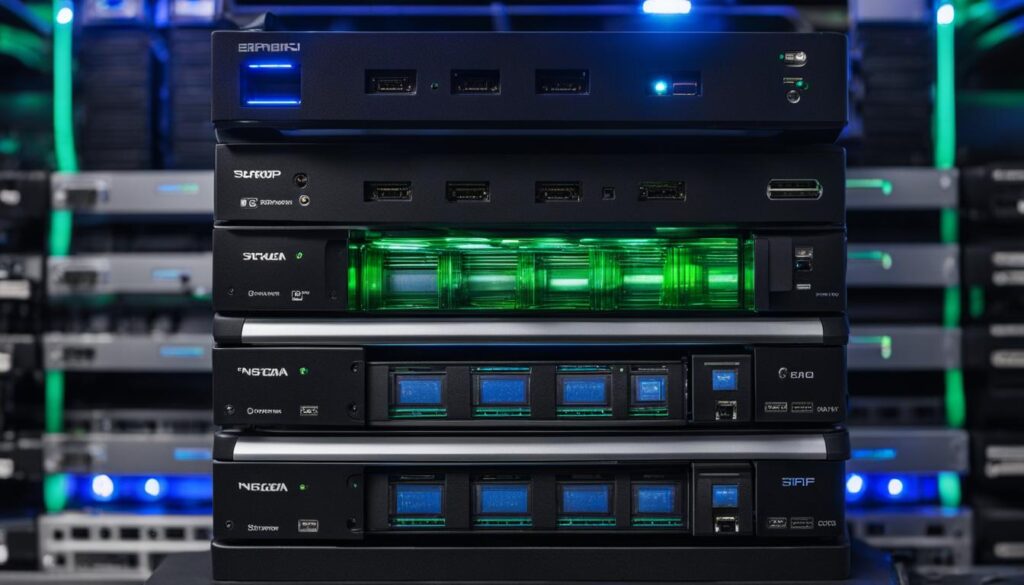
“Scalability and performance are crucial considerations when implementing enterprise backup hardware solutions. By choosing a scalable and high-performance solution, businesses can effectively meet their data protection needs.”
– John Smith, IT Director at XYZ Corporation
Long-Term Backup Strategy
Developing a long-term backup strategy is crucial for safeguarding your organization’s data. By considering key factors such as recovery point objectives (RPOs) and recovery time objectives (RTOs), you can determine the frequency and speed of your backups. Additionally, evaluating your encryption strategy and budget ensures that your backup hardware aligns with your long-term objectives.
Establishing a comprehensive and sustainable backup strategy is essential to mitigate the risk of data loss and ensure uninterrupted business continuity. Here are a few important considerations to keep in mind:
Recovery Point Objectives (RPOs)
Define your RPOs, which determine how much data you are willing to lose during a recovery process. This will guide your backup frequency and ensure that your backup hardware solution aligns with your data protection requirements.
Recovery Time Objectives (RTOs)
Set your RTOs, which determine the maximum acceptable downtime for recovering your critical systems and data. This helps you choose backup solutions and hardware that meet your recovery time requirements.
Encryption Strategy
Consider implementing strong encryption mechanisms for your backups to ensure the security and confidentiality of your data. Evaluate your backup hardware options to ensure they support encryption methods that align with your organization’s data protection policies.
Budget Allocation
Take into account your budget constraints when selecting backup hardware. Ensure that your chosen solution provides the necessary performance and scalability while staying within your financial means. Balancing cost-effectiveness with the required features and capabilities is key to long-term success.
By carefully designing and implementing a long-term backup strategy, you can achieve robust data protection and minimize the risk of data loss or unauthorized access.
Compliance and Security Considerations
When it comes to enterprise backup, compliance and security are of utmost importance. Protecting your backup data against unauthorized access or breaches is crucial to maintaining the integrity and confidentiality of your organization’s sensitive information. Compliance standards, such as the Payment Card Industry Data Security Standard (DSS) or HIPAA, further dictate the obligations and requirements for data protection solutions.
Ensure that your chosen backup hardware solution aligns with these regulatory obligations and compliance standards. Look for features and certifications that demonstrate the solution’s commitment to data security and privacy. Encryption, access controls, and secure encryption key management are essential components to consider when evaluating the security features of your backup hardware solution.
“Securing your backup data is as important as performing the backups themselves. Keep in mind that compliance and security measures are not just checkboxes to mark; they are vital safeguards for your organization’s critical information.”
– Jane Smith, Chief Information Security Officer at DataSec Corp
Examples of Compliance Standards:
| Compliance Standard | Description |
|---|---|
| Payment Card Industry Data Security Standard (DSS) | Regulates the handling and protection of payment card information to prevent fraud and data breaches. |
| Health Insurance Portability and Accountability Act (HIPAA) | Sets forth guidelines for safeguarding individuals’ protected health information to ensure privacy and security. |
| General Data Protection Regulation (GDPR) | Imposes data protection requirements on organizations handling personal data of individuals residing in the European Union. |
By addressing compliance and security considerations, you can confidently select an enterprise backup hardware solution that meets the stringent requirements of your industry and ensures the safety of your backup data.
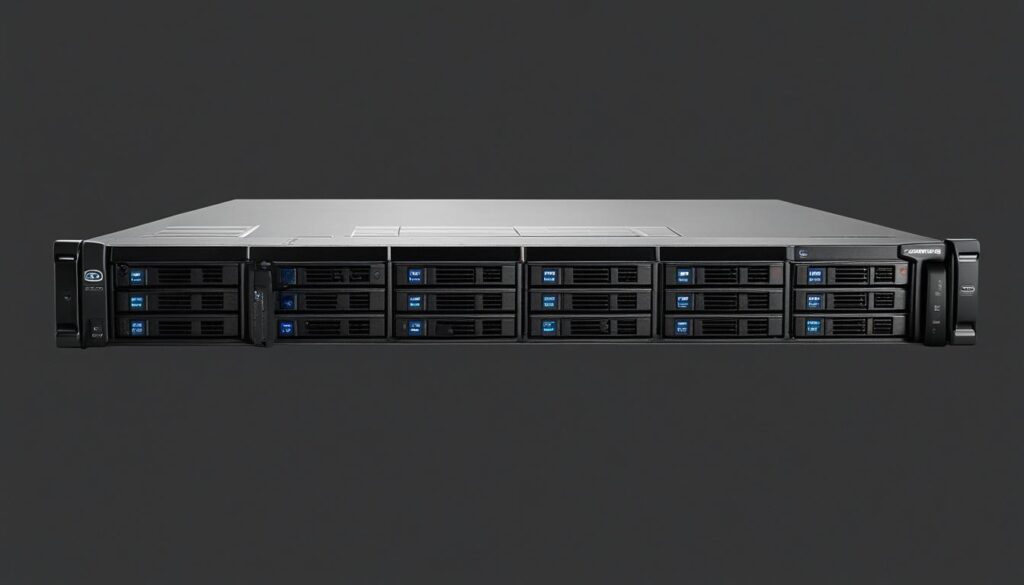
Monitoring and Analytics Capabilities
Effective management and oversight of your enterprise backup hardware is crucial for maintaining the security and reliability of your data. One important aspect of ensuring smooth operation is leveraging monitoring and analytics capabilities.
By selecting backup hardware solutions that provide real-time monitoring and reporting, you can stay on top of the status and health of your backup and recovery systems. These capabilities enable you to identify and address any issues or bottlenecks promptly, preventing potential data loss or disruptions.
With monitoring and analytics, you gain valuable insights into the performance of your backup processes, assessing factors such as backup success rates, data transfer speeds, and storage utilization. This data-driven approach allows you to optimize the efficiency and reliability of your enterprise backup hardware, ensuring seamless operations and minimal downtime.
Real-time Monitoring
Real-time monitoring provides you with up-to-the-minute information on the performance and status of your backup hardware. You can actively track and monitor key metrics, such as backup success rates, system utilization, and storage capacity. This proactive approach helps you detect any anomalies or issues before they escalate, allowing for timely intervention and resolution.
Automated Reporting
Backup hardware solutions with automated reporting capabilities simplify the process of generating comprehensive reports on the health and effectiveness of your backup and recovery systems. These reports offer detailed insights into key performance indicators, enabling you to assess the efficiency of your backup processes and identify areas for improvement.
Monitoring and analytics capabilities empower you to optimize the performance and reliability of your enterprise backup hardware, ensuring seamless operations and minimal downtime.
Backup.Country offers enterprise backup hardware solutions with robust monitoring and analytics capabilities, allowing you to actively manage and monitor your backup and recovery systems. With real-time monitoring and automated reporting, you can maximize the effectiveness of your backup processes, safeguarding your critical business data.
Optimize the performance and reliability of your enterprise backup hardware by leveraging monitoring and analytics capabilities. With proactive monitoring and detailed reporting, you can ensure the smooth operation of your backup processes and confidently protect your valuable data.

Best Data Backup Solutions for Your Business
When it comes to data backup, finding the right solution for your business is essential. With a wide range of options available in the market, it’s important to evaluate the offerings from leading backup software vendors. Here are some top names to consider: Veeam, Veritas, Acronis, VMware, Dell Technologies, Commvault, Cohesity, Rubrik, Druva, NAKIVO, HPE (Zerto), SEP, and Actifio.
Each of these vendors provides backup software solutions that cater to different business needs. By assessing the specific requirements of your organization, you can choose the backup solution that best fits your business. Whether you need enterprise backup hardware or backup storage solutions, these vendors offer comprehensive backup hardware solutions that ensure the security and availability of your critical business data.

Comparison of Data Backup Solutions
| Vendor | Features | Scalability | Integration with Cloud |
|---|---|---|---|
| Veeam | Advanced backup features with encryption and deduplication | Highly scalable for growing businesses | Seamless integration with leading cloud storage providers |
| Veritas | Comprehensive data protection with advanced analytics | Scalable to meet the needs of large enterprises | Supports integration with cloud storage platforms |
| Acronis | Complete backup and recovery solution with AI-based protection | Scalable for businesses of all sizes | Offers integration with cloud storage services |
| VMware | Efficient backup solution for virtualized environments | Scalable to support growing data volumes | Enables integration with popular cloud storage providers |
Table: Comparison of key features, scalability, and integration capabilities of selected backup software vendors for enterprise backup hardware and backup storage solutions.
By carefully evaluating these data backup solutions and comparing their features, scalability, and cloud integration capabilities, you can make an informed decision that aligns with your business needs. Remember to consider factors such as the size of your organization, the amount of data you need to back up, and your future growth plans.
With the right data backup solution in place, you can ensure that your critical business data is protected and available whenever you need it. Take the time to research and select the backup solution that provides the best fit for your organization, and enjoy peace of mind knowing that your data is secure.
Conclusion
Enterprise backup hardware plays a crucial role in ensuring the protection and security of valuable business data. By choosing the right hardware solution and complementing it with a suitable backup and recovery software, organizations can safeguard their data from loss or damage. Throughout this guide, we have explored various factors that should be considered when selecting enterprise backup hardware.
Scalability and performance are key considerations to accommodate the growing volume of data backups without impacting the IT infrastructure. Integration with cloud storage providers offers scalability, cost-efficiency, and remote accessibility. Compliance and security measures should also be taken into account to protect backup data from breaches and unauthorized access.
Top providers such as Veeam, Veritas, Acronis, VMware, Dell Technologies, Commvault, Cohesity, Rubrik, Druva, NAKIVO, HPE (Zerto), SEP, and Actifio offer a range of enterprise backup hardware solutions to cater to different business requirements. Taking the time to evaluate their offerings will help organizations select the best solution for their needs.
Backup.Country is a trusted provider of enterprise-grade cloud backup solutions, offering reliable data protection tailored to businesses’ unique requirements. By exploring Backup.Country’s offerings, organizations can secure their valuable data and ensure the continuity of their operations.
FAQ
Why is enterprise backup hardware important?
Enterprise backup hardware is crucial for ensuring the protection and security of valuable business data.
What factors should I consider when choosing enterprise backup hardware?
Factors such as the amount of data you need to backup, the speed and efficiency of the hardware, and the scalability for future growth should be taken into account.
Who are the top enterprise backup hardware providers?
Some top providers include Veeam, Veritas, Acronis, VMware, Dell Technologies, Commvault, Cohesity, Rubrik, Druva, NAKIVO, HPE (Zerto), SEP, and Actifio.
How can customer ratings and reviews help in choosing enterprise backup hardware?
Customer ratings and reviews provide valuable insights into the performance and satisfaction levels of different enterprise backup hardware solutions.
What factors should I consider in enterprise backup and recovery software?
Factors such as ease of use, scalability, integration with existing IT infrastructure, and support for different backup storage solutions should be taken into account.
What is the role of cloud storage in enterprise backup?
Cloud storage offers scalability, cost-efficiency, and remote accessibility. Many enterprise backup hardware solutions offer integration with cloud storage providers.
What are the scalability and performance considerations in enterprise backup hardware?
It is important to ensure that the hardware can handle the growing volume of data backups as your organization expands. Additionally, assess the performance capabilities of the hardware to ensure efficient backups.
How do I develop a long-term backup strategy?
Consider factors such as recovery point objectives (RPOs) and recovery time objectives (RTOs) to determine the frequency and speed of your backups. Evaluate your encryption strategy and budget to align with long-term objectives.
What compliance and security considerations should be addressed in enterprise backup hardware?
Ensure that the hardware meets regulatory obligations and compliance standards, such as the Payment Card Industry Data Security Standard (DSS) or HIPAA. Also, consider security features to protect backup data against unauthorized access or breaches.
Why are monitoring and analytics capabilities important in enterprise backup hardware?
These capabilities provide real-time monitoring and reporting on the status and health of backup and recovery systems, helping identify and address issues or bottlenecks.
Which are the best data backup solutions for businesses?
Leading backup software vendors, such as Veeam, Veritas, Acronis, VMware, Dell Technologies, Commvault, Cohesity, Rubrik, Druva, NAKIVO, HPE (Zerto), SEP, and Actifio, offer a range of data backup solutions to suit different business needs.
Why is enterprise backup hardware essential for data protection?
By choosing the right hardware solutions and complementing them with suitable backup and recovery software, organizations can safeguard their valuable data from loss or damage.
